
Caring for someone with incontinence often involves a long list of responsibilities. Between managing daily routines, changing products, helping with hygiene, and protecting bedding or furniture, it’s understandable that small changes in skin health can sometimes go unnoticed.
What are the early signs of incontinence-related skin irritation? Early signs may include redness or another change in skin tone, warmth, tenderness, itching, burning, chafing, or skin that looks unusually damp, shiny, or soft. A person may also pull away, grimace, or become uncomfortable during cleansing and product changes.
These changes can appear before more serious skin damage develops. A slightly sensitive area or a patch that looks different from the person’s usual skin may signal that the skin’s protective barrier is under stress.
A quick check during routine product changes, along with gentle hygiene and an appropriate changing routine, can help caregivers identify concerns and seek professional guidance when needed.
What Is Incontinence-Related Skin Irritation?
Incontinence-related skin irritation is inflammation or discomfort associated with repeated or prolonged exposure to urine, stool, moisture, and friction.
Healthcare providers may refer to moisture-related inflammation caused by urine or stool as incontinence-associated dermatitis, or IAD. When the skin stays wet or is repeatedly exposed to irritants, its protective barrier may weaken, making the area more vulnerable to inflammation and damage.
Incontinence-related irritation commonly affects areas exposed to urine or stool, including the:
- Buttocks
- Groin
- Inner and upper thighs
- Skin folds
- Perineal area between the genitals and anus
Incontinence-associated dermatitis isn’t the same as a pressure injury, fungal infection, or allergic reaction, although these conditions may sometimes have similar symptoms. Caregivers can watch for early changes, but a healthcare professional should determine the cause when the condition is unclear.
What Does Incontinence Skin Irritation Look Like?
Early signs of incontinence skin irritation may begin subtly. The skin may simply look different from usual or become more sensitive during cleansing and product changes.
Caregivers may notice:
Changes in Appearance
- Redness, pink patches, or another change from the person’s usual skin tone
- Darker, purple, gray, or ashen areas on darker skin tones
- Shiny, damp, or overly soft skin
- Mild swelling
- Small areas of peeling or flaking
Changes in How the Skin Feels
- Warmth
- Tenderness or soreness
- Itching, stinging, or burning
- Chafing
Changes During Care
- Increased sensitivity during cleansing
- New discomfort during a product change
Redness isn’t always the most visible early sign, particularly on darker skin. Changes in warmth, texture, tenderness, or behavior may be easier to recognize.
As irritation progresses, the skin may look rough, begin peeling, or develop fragile areas that are more easily damaged. Some people may describe burning or stinging when urine or stool touches the affected skin.
When Someone Can’t Describe Their Discomfort
For someone living with dementia, limited sensation, or a communication difference, behavior may provide an early clue. The person may:
- Wince or pull away during cleansing
- Guard an area of the body
- Become restless during a product change
- Resist sitting in a certain position
- Show new distress during personal care
- Become unusually quiet or withdrawn
These behaviors can have many causes, so they don’t confirm skin irritation by themselves. However, they’re worth noting, especially when they occur alongside a visible or physical skin change.

Why Incontinence Can Irritate the Skin
The skin acts as a protective barrier. Repeated exposure to moisture, irritants, friction, and pressure can weaken that barrier and make irritation more likely.
Several factors may contribute.
Prolonged Moisture Exposure
Urine, stool, or sweat may remain against the skin longer than intended, particularly when a product is saturated, doesn’t retain moisture well, or a change is delayed. Over time, excess moisture can soften the skin and make it more vulnerable to friction and damage.
Friction During Movement
Walking, repositioning in bed, transferring from a chair, or shifting weight can create friction. Damp skin may be more easily irritated when it rubs against another area of skin, clothing, or an incontinence product.
An improper product fit may add to this friction. A product that’s too tight may rub or create pressure, while one that’s too loose may shift and allow leaks.
Heat and Limited Airflow
Warm conditions inside an absorbent product can increase sweating and trap moisture against the skin. Heat, humidity, and limited airflow may make managing moisture more difficult.
Exposure to Stool
Bowel incontinence can be particularly hard on the skin. Stool contains substances that may irritate and weaken the skin barrier, especially when contact is prolonged.
Frequent Cleansing
Cleaning after an accident is necessary, but frequent scrubbing, rough washcloths, strong fragrances, or harsh cleansers may add stress to already sensitive skin.
Product-Related Issues
An incontinence product may contribute to discomfort if it:
- Doesn’t fit properly
- Rubs or shifts during movement
- Provides too little absorbency
- Allows moisture to remain near the skin
- Is worn longer than the person’s needs or care plan allows
- Contains a material or fragrance that causes sensitivity
A highly absorbent product still needs to be checked and changed according to the person’s needs. Absorbency doesn’t replace regular monitoring, cleansing, or changing.
Related: Skin Care and Incontinence
Use Each Product Change as a Quick Skin Check
A short, consistent skin check can help caregivers notice changes before they become more severe. It doesn’t need to add much time to the changing routine.
1. Look
Check the skin that has been exposed to urine or stool. Pay particular attention to the groin, inner thighs, buttocks, perineal area, and skin folds.
Look for changes in:
- Color
- Texture
- Moisture
- Swelling
- Peeling
- Skin integrity
Compare the area with the person’s usual skin rather than looking only for redness.
2. Listen
If the person can communicate, ask whether the area feels sore, warm, itchy, tender, or painful.
Keep the question simple. For example, ask, “Does this area feel sore?” rather than asking several questions at once.
3. Notice Behavior
Watch for grimacing, pulling away, guarding, restlessness, or a sudden change in behavior during cleansing and changing. These responses may be especially important when the person can’t easily describe discomfort.
4. Clean Gently
Follow the person’s care plan and the cleanser’s directions. Avoid unnecessary scrubbing, prolonged wiping, and strongly fragranced products.
5. Dry Carefully
Pat the skin dry rather than rubbing. Make sure skin folds are gently dried, since moisture may collect in those areas.
6. Protect as Directed
Use barrier products or other skin-protection products only according to the person’s care plan, a healthcare professional’s guidance, or the product directions.
7. Recheck
Note whether the area improves, worsens, spreads, or returns. A written note may help caregivers identify a pattern or clearly describe the changes to a healthcare professional.
Along with regular skin checks, the product’s fit, absorbency, and changing routine can affect how long moisture stays near the skin and whether friction develops.
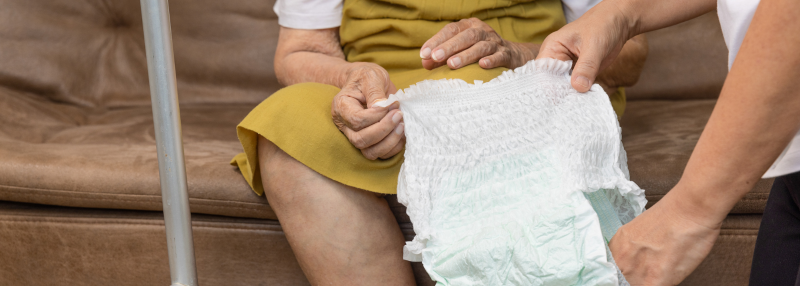
Product Fit and Absorbency Can Make a Difference
Product fit may not always seem like a major concern during a busy care routine, but it can affect leakage, friction, comfort, and moisture exposure.
Products that are too small can rub against the skin and create pressure points. Products that are too large may shift during movement and allow leakage. Likewise, products with insufficient absorbency may leave moisture against the skin for longer periods.
Depending on the individual’s needs, caregivers may consider:
- Adult briefs (Pull-ups)
- Protective underwear (Diapers)
- Bladder control pads
- Liners or guards
- Booster pads (Diaper Doublers)
- Underpads
The best choice depends on several factors, including leakage volume, mobility level, caregiver involvement, existing skin concerns, and personal preferences.
Consistent changing schedules remain just as important as product selection. Even highly absorbent products perform best when paired with routine monitoring and timely changes.
Explore our adult briefs, protective underwear, pads, guards, booster pads, and underpads.
Need Help Comparing Incontinence Products?
Our Product Experts can help eligible individuals and caregivers explore available sizes, styles, absorbency options, possible insurance coverage, and discreet home delivery.
You can also call 888-273-4535.
When to Call a Healthcare Provider
Not every area of irritation becomes a serious problem, but some skin changes need professional evaluation. Contact a healthcare provider if the irritation is worsening, repeatedly returning, difficult to identify, or interfering with the person’s comfort.
Contact a Healthcare Provider for These Skin Changes
- Open, cracked, or bleeding skin
- Blisters
- Drainage or an unusual odor
- Increasing warmth or swelling
- Worsening pain or tenderness
- Spreading redness or discoloration
- A rash that repeatedly returns
- Skin changes that don’t improve with the person’s usual care plan
- Discoloration that doesn’t fade after pressure is removed
- Changes located over a bony or pressure-exposed area
Seek Prompt Medical Guidance If the Person Also Has
- Fever or other signs of illness
- Severe pain
- Significant swelling
- Rapidly spreading redness or discoloration
- Rapidly worsening skin damage
Professional evaluation is also important when the person has diabetes, poor circulation, reduced sensation, limited mobility, a weakened immune system, a history of pressure injuries, or another condition that may affect skin healing.
Related: Rash, Yeast, or Pressure? How to Tell What’s Causing Skin Irritation

How ActivStyle Can Help with Incontinence Supply Needs
Managing incontinence often involves more than selecting a product from a store shelf. Caregivers may have questions about sizing, fit, absorbency, coverage, documentation, and maintaining a dependable supply.
At ActivStyle, we help eligible individuals and caregivers navigate these challenges. Our team can assist with verifying insurance eligibility, gathering required documentation, identifying products that fit individual needs, and coordinating discreet home delivery.
We also offer reorder reminders so families can spend less time worrying about supply levels and more time focusing on care.
Coverage and available products vary by state, insurance plan, medical documentation, and individual medical need. To learn more:
Frequently Asked Questions
What is the first sign of incontinence skin irritation?
Early signs may include redness or another change from the person’s usual skin tone, warmth, tenderness, itching, burning, chafing, or skin that looks unusually damp, shiny, or soft. Discomfort or distress during cleansing may also be an early clue.
Can adult diapers cause skin irritation?
Adult diapers (Adult Briefs) and other absorbent products may contribute to irritation if they don’t fit properly, shift or rub during movement, become overly saturated, or remain in place too long.
Choosing an appropriate size and absorbency and following a regular changing routine may reduce prolonged moisture and friction.
How often should incontinence products be changed?
Products should be changed promptly after bowel leakage and whenever they become wet, soiled, saturated, or uncomfortable. The appropriate timing depends on the person’s needs, product, skin condition, type of incontinence, and care plan.
What helps prevent incontinence-related skin irritation?
Prompt product changes, gentle cleansing, careful drying, regular skin checks, an appropriate product fit, and suitable absorbency may help reduce moisture and friction.
Caregivers should also follow any individualized skin-care instructions provided by the person’s healthcare professional.
Are breathable incontinence products better for sensitive skin?
Breathable materials may support comfort and airflow, but breathability is only one consideration. Fit, absorbency, moisture retention, changing frequency, materials, and the person’s individual sensitivities also matter.
When should a caregiver call a doctor about a rash from incontinence?
Contact a healthcare provider if irritation is worsening, painful, recurring, spreading, open, bleeding, blistered, draining, or showing possible signs of infection. Professional evaluation is also recommended when the cause is unclear or the area doesn’t improve with the person’s usual care plan.
Can insurance cover incontinence products?
Medicaid or another insurance plan may cover medically necessary incontinence products for eligible individuals. Coverage, products, quantities, documentation, and costs vary by state and plan.
To ask about available products and possible coverage, request information from ActivStyle or call 888-273-4535.