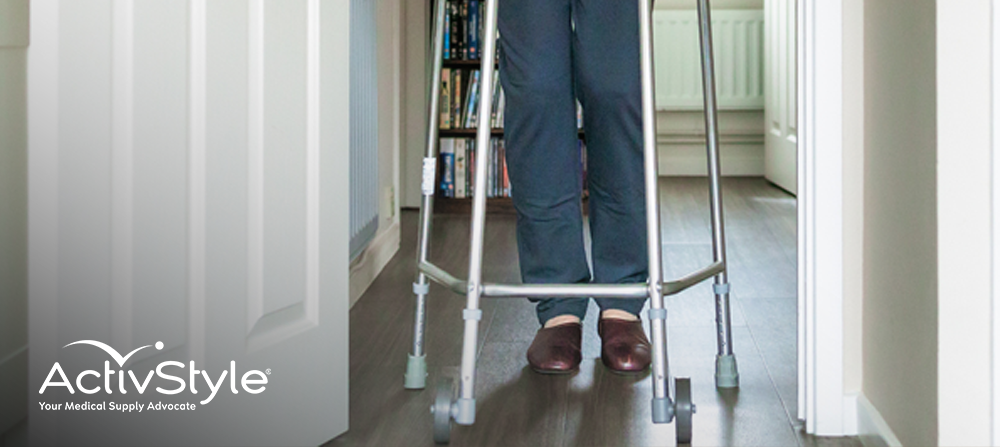
You feel the urge, and it’s strong. But standing up takes longer than it used to. Your feet hesitate at the doorway. Then there’s the button on your pants.
Parkinson’s can make toileting harder because bladder urgency may happen at the same time as slowed movement, stiffness, freezing, balance changes, or trouble managing clothing. Medication “off” periods and nighttime symptoms can add to the challenge.
Still, new bladder symptoms should be discussed with a doctor because Parkinson’s isn’t the only possible cause. If you live with Parkinson’s or help someone who does, this article explains what may be happening and what can make bathroom trips easier to manage day to day.
Read About
- Parkinson’s and Bladder Problems
- Why Movement Can Make Toileting Harder
- Clothing and Medication Timing
- Medication “Off” Periods
- Nighttime Bathroom Trips
- Bathroom Setup and Routines
- Choosing Incontinence Products
- When to Contact a Doctor
- Caregiver Tips
- Product and Supply Support
- FAQs
Parkinson’s and Bladder Problems
Parkinson’s affects the brain and nervous system in ways that can change movement and bladder control.
The Parkinson’s Foundation explains that bladder problems with Parkinson’s may include urgency, frequency, waking at night to urinate, and difficulty emptying the bladder. These symptoms aren’t universal, and they can look different from one person to another.
Common terms include:
- Urgency: A sudden need to urinate that’s difficult to delay
- Frequency: Needing to urinate more often than usual
- Nocturia: Waking during the night to urinate
- Difficulty emptying: Trouble starting the flow or feeling that the bladder hasn’t fully emptied
- Functional incontinence: Leakage that happens because movement, memory, clothing, or another barrier makes it difficult to reach or use the bathroom in time
Cleveland Clinic includes Parkinson’s among the conditions that may contribute to functional incontinence. Poor lighting, clutter, difficult clothing, and other physical barriers may also play a role.
With Parkinson’s and overactive bladder, the bladder muscle may contract before the bladder is full. Everyday triggers such as running water or arriving home may bring on a sudden urge, according to the Parkinson’s Foundation.
Many people with Parkinson’s have more than one of these issues at once. For example, someone might have urge-related leakage and also have trouble getting to the bathroom quickly. Only a healthcare provider can sort out which factors are involved.
Why Movement Can Make Toileting Harder
A bathroom trip is really a chain of steps:
- Noticing the urge
- Deciding to get up
- Standing safely
- Starting to walk
- Getting to the bathroom
- Handling the door, the light, and clothing
- Sitting down safely
Parkinson’s can slow down one or more of these steps. Slowed movement and stiffness can make standing take longer. Freezing of gait may interrupt walking, particularly around doorways or narrow spaces. Balance changes may call for a slower pace, while reduced hand coordination can make a zipper or button another obstacle.
When urgency and slowed movement happen together, there’s less time to complete each step. That’s why toileting difficulties may reflect a combination of bladder symptoms, mobility changes, and barriers in the person’s surroundings.
Clothing Can Create Another Barrier
Clothing is easy to overlook, but buttons, stiff zippers, belts, tight waistbands, several layers, and long garments can add extra steps to an urgent bathroom trip.
Elastic waistbands, simple fasteners, fewer layers, and clothing that lowers easily may help. Dressing while seated may also feel steadier for some people.
Adaptive clothing doesn’t suit every person or situation. An occupational therapist can suggest options based on hand function, balance, mobility, and daily routines.
Medication Timing and “Off” Periods May Affect Toileting
Many people with Parkinson’s notice that their movement changes over the day as medication takes effect and then wears off. A bathroom trip that feels manageable during an “on” period may be much harder during an “off” period.
Nighttime and early morning can be especially hard, since medication effects may have worn off overnight. The Parkinson’s Foundation notes that some people may not reach the bathroom in time when that happens.
Medications for Parkinson’s or other conditions may also affect urinary symptoms, blood pressure, alertness, or mobility. If leakage tends to happen at certain times, such as late afternoon or immediately after waking, write down the pattern and share it with the doctor managing Parkinson’s care.
Don’t change medication timing or doses without guidance from the healthcare provider who prescribed them.
Why Nighttime Bathroom Trips May Be Harder
Nighttime urination is a common concern for people living with Parkinson’s. Several factors may overlap at night:
- Urgency or waking to urinate
- Medication wearing off and increased stiffness
- Low lighting, sleepiness, or lightheadedness
- A long or cluttered path to the bathroom
- Difficulty standing, sitting, or moving to the toilet safely
- Limited caregiver availability
The Parkinson’s Foundation also notes that low daytime blood pressure may contribute to greater urine production at night in some people. Nighttime patterns should be discussed with the person’s healthcare team rather than managed by changing medications or greatly reducing fluids without guidance.
Nighttime urination may be related to bladder urgency, waking for another reason and then noticing the need to go, blood pressure changes, medication effects, or another health condition. Medication wearing off may not increase urine production itself, but it can make the trip to the bathroom more difficult.
Ways to Make Nighttime Bathroom Trips More Manageable
- Keep the route clear of cords, rugs, and furniture.
- Use nightlights or motion-activated lighting.
- Keep mobility aids in their usual, easy-to-reach location.
- Choose sleepwear that’s easy to lower.
- Allow time to sit before standing if the healthcare team recommends it.
- Ask whether a bedside toileting option is appropriate.
- Consider an overnight incontinence product, flow through booster pad, or an underpad for added protection.
If balance or mobility is limited, ask the healthcare team whether assistance is needed for nighttime bathroom trips and how that help should be provided.
Make the Bathroom Easier to Reach and Use
Small barriers can create major delays when the urge is strong. Keep walkways uncluttered and wide enough for mobility aids, improve lighting, make the bathroom easy to find, and store supplies in a consistent and reachable place.
Allow enough time, avoid rushing, and give one calm instruction at a time when that helps.
A physical or occupational therapist can assess how the person stands, sits, and moves to and from the toilet. A therapist may also recommend equipment such as grab bars, raised toilet seats, or toilet safety frames. Equipment should be selected for the individual and installed correctly.
Build a Routine Around the Person’s Patterns
Scheduled bathroom opportunities may help some people, but there’s no single schedule that works for everyone. Track:
- When urgency or leakage occurs
- Daytime and nighttime patterns
- Whether leakage happens while managing clothing
- Medication, fluid, and caffeine timing
- Constipation or bowel changes
- Changes in movement and product performance
This record can help a healthcare provider identify patterns and suggest a routine that fits the person. Drinking less to avoid accidents isn’t a good default. Talk with a healthcare provider before changing how much the person drinks.
Related Reading: What to Tell Your Doctor About Bladder Leaks
Choose Products Based on Mobility and Assistance Needs
There’s no single best incontinence product for everyone living with Parkinson’s. The appropriate choice depends on mobility, hand control, leakage, changing routines, and caregiver support.
| Product Type | When It May Help |
| Bladder control pads or male guards | May suit lighter leakage when the person can use the bathroom and change independently |
| Protective underwear | May work for someone who can stand and lower or raise the product independently |
| Tab-style adult briefs | Open at the sides, which may make caregiver-assisted or in-bed changes easier |
| Booster pads | Add absorbency inside a compatible product but don’t correct poor fit |
| Underpads | Protect beds and chairs but don’t replace a properly fitting wearable product |
Daytime and nighttime needs may differ. Some people use one product during the day and a different style or absorbency overnight. Everyone experiences incontinence differently so what works for one may not work for another.
Compare products based on fit, absorbency, mobility, hand control, skin health, caregiver assistance, and whether daytime and nighttime needs differ. Personal comfort and preference matter, too.
You can also explore ActivStyle’s adult briefs and incontinence products. Absorbent products support daily management, but they don’t treat the cause of bladder symptoms or replace a medical evaluation.
Related Reading: Which Incontinence Product Types Are Best for You?
Find a Product That Fits the Care Routine
Parkinson’s-related movement changes can affect which products are easiest to use. ActivStyle’s Product Experts can help eligible new customers compare available options based on fit, absorbency, mobility, and changing needs.
Request Information or call 888-273-4535.
When Bladder Changes Need Medical Attention
It’s easy to assume every bladder change is “just the Parkinson’s.” But urinary symptoms can also come from infection, constipation, medication effects, prostate concerns, diabetes, pelvic floor changes, or other conditions.
Contact a healthcare provider about:
- New urgency or frequency
- Incontinence that suddenly becomes worse
- Difficulty starting urination
- A feeling that the bladder doesn’t empty
- Symptoms that begin after a medication change
- New falls or movement changes related to bathroom trips
- Constipation or bowel changes
- Repeated nighttime disruption
Get prompt medical care for pain or burning during urination, fever, blood in the urine, sudden confusion, rapidly worsening symptoms, or sudden neurological changes. The National Institute of Diabetes and Digestive and Kidney Diseases recommends seeking care for possible kidney infection symptoms, which may include fever, chills, painful or frequent urination, and bloody or cloudy urine.
A sudden inability to urinate, especially with severe lower abdominal pain, requires immediate medical attention. Learn more about urinary retention warning signs.
Review bladder medications with the healthcare team because side effects and interactions may vary based on the person’s symptoms, health history, and other medications.
Related Reading: How Chronic Conditions Affect Bladder Control as You Age
How Caregivers Can Support Dignity and Independence
Helping someone with Parkinson’s use the bathroom can require time and physical assistance, especially overnight. The person living with Parkinson’s should remain involved in decisions about products, routines, and support whenever possible.
Ask before helping, provide only the assistance needed, and allow enough time rather than rushing. Use respectful adult language, protect privacy during toileting and changing, and give calm, one-step cues when they’re helpful.
Watch for nonverbal signs of urgency or discomfort, respond to accidents calmly, and revisit the routine as symptoms and abilities change.
Clearing the route, improving lighting, choosing clothing that’s easy to lower, allowing extra time, and keeping supplies nearby can make toileting easier. A physical or occupational therapist can provide advice about movement, clothing, bathroom equipment, and individual safety needs.
Product Support for Changing Mobility Needs
ActivStyle helps eligible individuals and caregivers compare incontinence products, understand possible insurance coverage, complete required paperwork, and receive supplies through discreet home delivery.
New to ActivStyle?
Request Information or call 888-273-4535.
Already an ActivStyle Customer?
Use the Current Customer Service Form or call 855-284-6757 for help with an order or product concern.
Frequently Asked Questions
Can Parkinson’s cause urinary urgency?
Yes. Parkinson’s-related brain changes can make the bladder contract too often or too strongly, causing a sudden urge. Other conditions can also cause urgency, so new symptoms should be evaluated.
Why is it harder to reach the bathroom with Parkinson’s?
Urgency may happen at the same time that Parkinson’s slows standing, walking, balance, and hand movements. Freezing, stiffness, difficult clothing, poor lighting, and medication “off” periods can add delays.
Why does someone with Parkinson’s urinate more at night?
Nighttime urination may be related to bladder urgency, waking for other reasons, blood pressure changes, medications, or another health condition. Medication wearing off overnight may make bathroom trips harder even if it doesn’t cause the increased urine production.
What clothing makes toileting easier with Parkinson’s?
Elastic waistbands, simple fasteners, and fewer layers may help. An occupational therapist can recommend options based on the person’s hand control, balance, mobility, and dressing routine.
What type of incontinence product may help someone with limited mobility?
Tab-style briefs may be easier for caregiver-assisted changes. Protective underwear may suit someone who can stand and manage the product independently. Underpads protect surfaces, while compatible booster pads may add absorbency.
When should bladder symptoms with Parkinson’s be discussed with a doctor?
Discuss new, worsening, or disruptive symptoms with a healthcare provider. Seek prompt medical care for pain, burning, fever, blood in the urine, an inability to urinate, sudden confusion, or rapidly worsening symptoms.